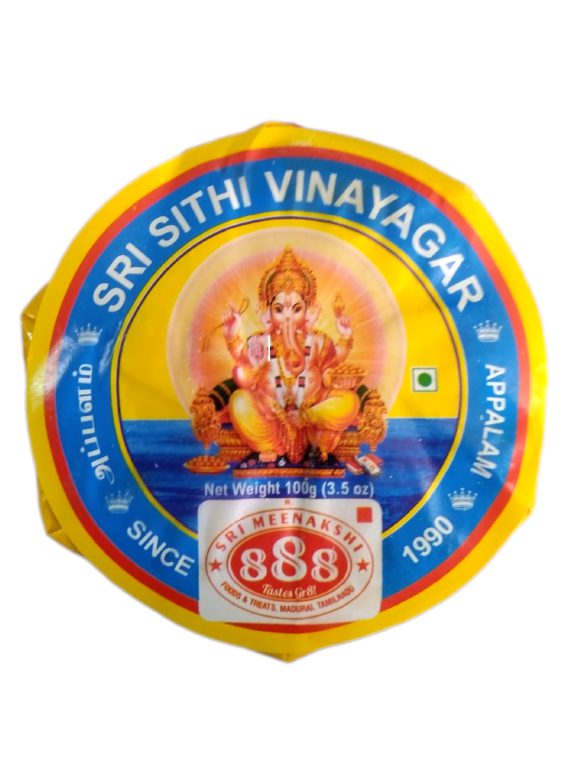
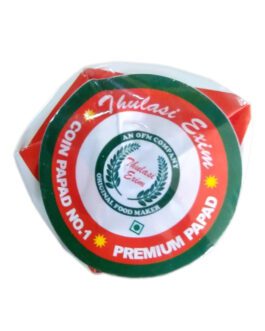
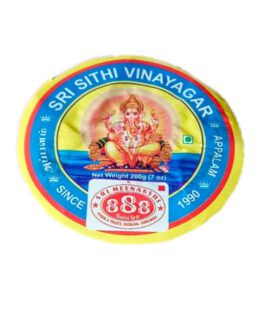
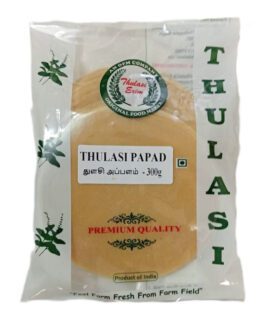
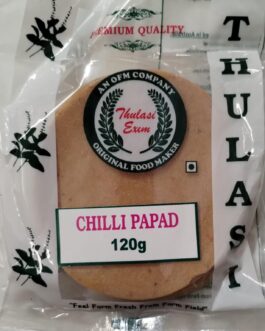
888 Premium Papad – No:6 – 100gm
Short Description:
Papad is a traditional Indian wafer-thin crisp made from lentil flour and spices. Whether roasted or fried, it delivers a bold crunch and is often served as a side, snack, or starter. Gluten-free, high in protein, and packed with flavor.
Description
🌾 Introduction: The Crunch That Unites India
Papad—also known as Appalam, Pappadam, or Papadam—is more than a crispy side dish. It’s a culinary icon that transcends regions, languages, and generations. Made from lentil flours like urad, moong, or chana, and seasoned with spices like black pepper, cumin, or asafoetida,it is sun-dried, shelf-stable, and explosively flavorful.
From Tamil Nadu’s thin, peppery appalams to Rajasthan’s fiery moong dal papads, every region has its own version. Whether roasted on an open flame, deep-fried to golden perfection, or microwaved for a guilt-free crunch, it is a versatile, nostalgic, and power-packed addition to any Indian meal.
🧪 Nutritional Profile & Health Benefits
It is not just a treat for the taste buds—it’s also nutritionally functional when consumed in moderation.
Typical Nutrients per 100g (varies by type):
- Calories: 350–400 kcal
- Protein: 18–22g
- Carbohydrates: 50–60g
- Fiber: 5–8g
- Fat: 1–5g (before frying)
- Iron: 3–5mg
- Calcium: 50–100mg
- Sodium: Moderate (varies by salt content)
Health Benefits:
- High Protein: Lentil-based it support muscle repair and satiety.
- Digestive Aid: Spices like cumin, black pepper, and asafoetida stimulate digestion.
- Gluten-Free: Ideal for gluten-sensitive diets.
- Low in Fat (when roasted): A healthy snack alternative.
- Shelf-Stable: No refrigeration needed—perfect for travel and storage.
- Customizable: Can be made low-sodium or spiced to suit dietary needs.
🧑🍳 Culinary Uses: More Than Just a Side
It is a multi-functional marvel in Indian cuisine:
- Meal Accompaniment: Served with rice, dal, or curd rice for added crunch.
- Starter: Topped with chopped onions, tomatoes, and chutneys as masala papad.
- Snack: Roasted or fried and eaten plain or with dips.
- Crushed Garnish: Sprinkled over poha, upma, or salads.
- Stuffing & Coating: Crushed papad used in tikkis, rolls, or as a crunchy coating.
- Papad Curry: In Rajasthan and Gujarat, papad is simmered in spiced yogurt gravy.
Preparation Methods:
- Roasted: On open flame or microwave—low fat, smoky flavor.
- Fried: Deep-fried for maximum puff and crunch.
- Toasted: On tawa or air fryer for a balanced crisp.
🎭 Cultural Significance: A Ritual of Crunch
Papad is deeply woven into India’s culinary and cultural fabric. In Tamil Nadu, appalam is a must-have with sambar rice. In Kerala, pappadam completes the Onam sadya. In Gujarat and Rajasthan, papad is part of daily thali meals and festive spreads.
In many households, papad rolling is a summer tradition, where women gather to prepare and sun-dry batches for the year. It’s a symbol of hospitality, often served to guests with tea or as a pre-meal nibble.
Papad also features in wedding feasts, temple offerings, and religious fasts, making it both sacred and celebratory.
🛍️ Packaging & Branding Tips
- Label Tagline: “Crisp with Character. Crunch with Culture.”
- Visuals: Use sun motifs, traditional rolling boards, and regional textures.
- Bilingual Copy: Include Tamil like “அப்பளம் – பாரம்பரிய சுவை, நம் வீட்டு குரCrunch” (Appalam – Traditional Taste, Our Home’s Crunch).
- USP Highlights:
- 100% Natural Lentil Flour
- Sun-Dried & Hand-Rolled
- No Preservatives or Additives
- Gluten-Free & Vegan
Papad is a culinary time capsule—a crisp that carries the stories of grandmothers, festivals, and family meals. It’s a product that blends flavor, function, and folklore, offering a satisfying crunch with every bite. Whether you’re serving it with sambar or reinventing it as a gourmet snack, it is a powerful symbol of India’s edible heritage.
🌸 Emotional Resonance & Family Ritual
Papad is more than a crisp—it’s a memory etched in flavor. In Tamil households, the sound of appalam puffing over an open flame is as familiar as temple bells or the sizzle of mustard seeds in hot oil. It’s the final flourish to a meal, the crunch that completes a plate of sambar rice or curd rice. For many, papad evokes childhood nostalgia—waiting eagerly for that golden disc to be passed from the kitchen, still warm and brittle.
In rural Tamil Nadu, papad-making is a seasonal ritual. Women gather in courtyards during summer to roll, shape, and sun-dry batches of appalam. It’s a communal act of preservation and pride, where recipes are passed down through generations and every family has its own spice blend and technique.
🌍 Modern Versatility & Global Appeal
Today, papad is being rediscovered as a gourmet ingredient. Chefs crush it over salads for texture, use it as a base for canapés, or blend it into fusion dishes. Health-conscious consumers prefer roasted or air-fried versions, and gluten-free eaters embrace it as a safe, flavorful snack.
Papad also travels well—making it ideal for export markets, travel kits, and online retail. Its long shelf life, bold flavor, and cultural authenticity make it a favorite among the Indian diaspora and curious global foodies alike.
Whether served in a five-star restaurant or a humble thali, papad delivers crunch, character, and cultural pride. It’s not just a side dish—it’s a story of resilience, resourcefulness, and regional brilliance. Every bite is a tribute to India’s spice legacy and the timeless joy of shared meals.
Sources:
Buy online – TasteTheTradition
Additional information
| weight | 100g |
|---|
Reviews
There are no reviews yet.